Training Report on Micronutrient Powders (MNP) for Children Under Two Years

Project Title:
Provision of Life-Saving, Community-Based Preventive Nutrition Assistance to Vulnerable Populations
Activity:
Training on Micronutrient Powders (MNP) for Children Under Two Years
Implementing Organization: SOHHA (Somali for Helping Hands Association)
Donor: Somalia Humanitarian Fund (SHF)
Location: Beletweyne District, Hiran Region, Somalia
Training Period: Two days [30 to 31 2025]
Participants:
24 participants (16 Community Health Workers and 8 IYCF Counsellors)
1. Background and Rationale
Micronutrient deficiencies among children under two years of age remain a critical public health challenge in Beletweyne District. Inadequate intake of essential micronutrients such as iron, zinc, vitamin A, iodine, and folate contributes to anemia, weakened immunity, poor growth, and delayed cognitive development. These challenges are exacerbated by food insecurity, limited dietary diversity, and suboptimal infant and young child feeding practices.
To address these gaps, SOHHA, with financial support from the Somalia Humanitarian Fund (SHF), conducted a specialized training on Micronutrient Powders (MNP) targeting Community Health Workers (CHWs) and IYCF Counsellors. The training aimed to strengthen frontline workers’ capacity to promote, distribute, and monitor correct use of MNP at household level as part of community-based preventive nutrition services.
2. Objectives of the Training
Overall Objective
To strengthen the capacity of CHWs and IYCF Counsellors to effectively support the use of micronutrient powders in children aged 6–23 months to prevent and reduce micronutrient deficiencies.
Specific Objectives
- To enhance participants’ understanding of micronutrient deficiencies and their impact on child health and development
- To build practical skills on correct MNP dosage, preparation, and administration
- To strengthen integration of MNP messaging with Infant and Young Child Feeding (IYCF) practices
- To address common misconceptions and side effects associated with MNP use
- To improve community-level follow-up, monitoring, and caregiver compliance
3. Training Methodology
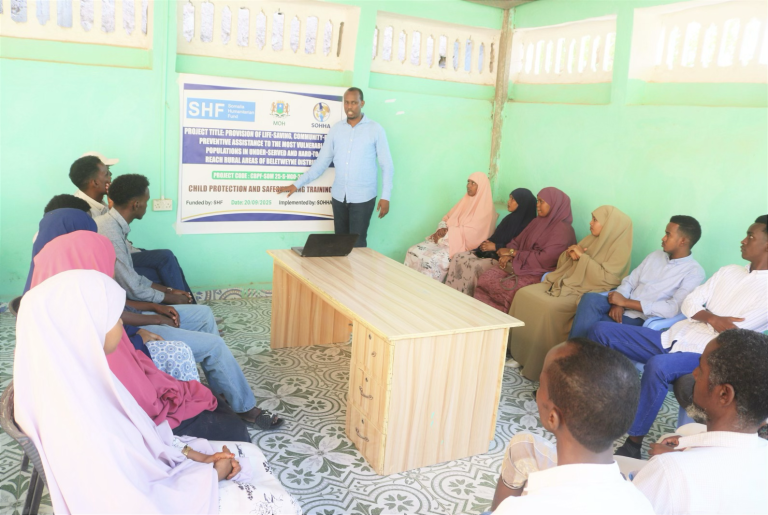
The training adopted a Training of Trainers (ToT) and participatory approach, enabling participants to cascade knowledge to caregivers and households. The methodology included:
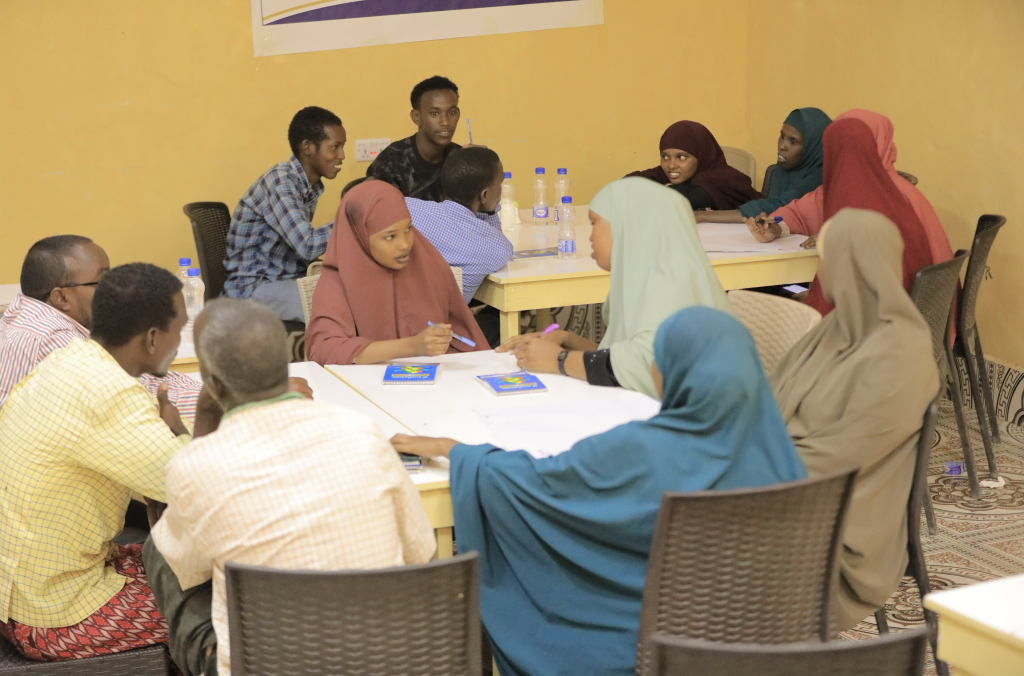
- Interactive presentations and group discussions
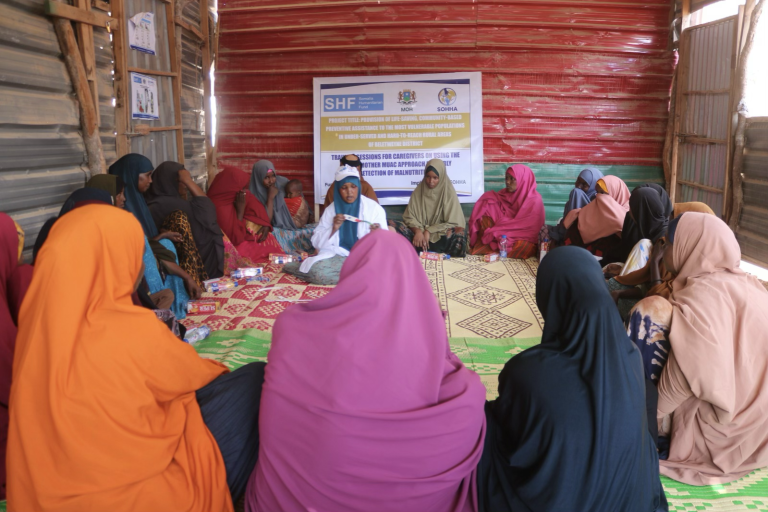
- Practical demonstrations on MNP preparation and use
- Role plays on caregiver counseling and problem-solving
- Question-and-answer sessions
- Experience sharing and peer learning
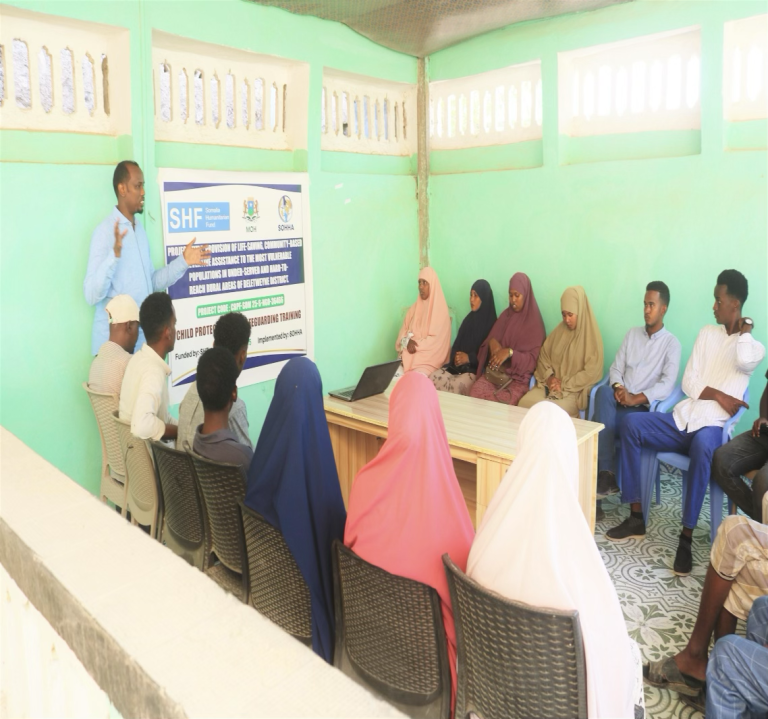
Training was facilitated by SOHHA Nutrition Officers and experienced IYCF trainers, with reference to national and cluster nutrition guidelines.
4. Training Content
The training covered the following core modules:
- Overview of Micronutrient Deficiencies
- Types and causes of micronutrient deficiencies
- Consequences on child growth, immunity, and development
- Introduction to Micronutrient Powders (MNP)
- Composition and nutritional value of MNP
- Benefits of MNP supplementation for children 6–23 months
- Correct Use of MNP
- Eligibility criteria and age group
- Dosage, frequency, and duration
- Step-by-step preparation and mixing with complementary foods
- Foods recommended and foods to avoid
- Integration with IYCF Practices
- Continued breastfeeding
- Minimum dietary diversity and meal frequency
- Hygiene and food safety
- Roles and Responsibilities of CHWs and IYCF Counsellors
- Community sensitization and caregiver counseling
- Household follow-up and monitoring
- Referral and reporting mechanisms
5. Participants
A total of 24 participants attended the training, selected based on their direct involvement in community nutrition activities.
- Community Health Workers (CHWs): 16
- IYCF Counsellors: 8
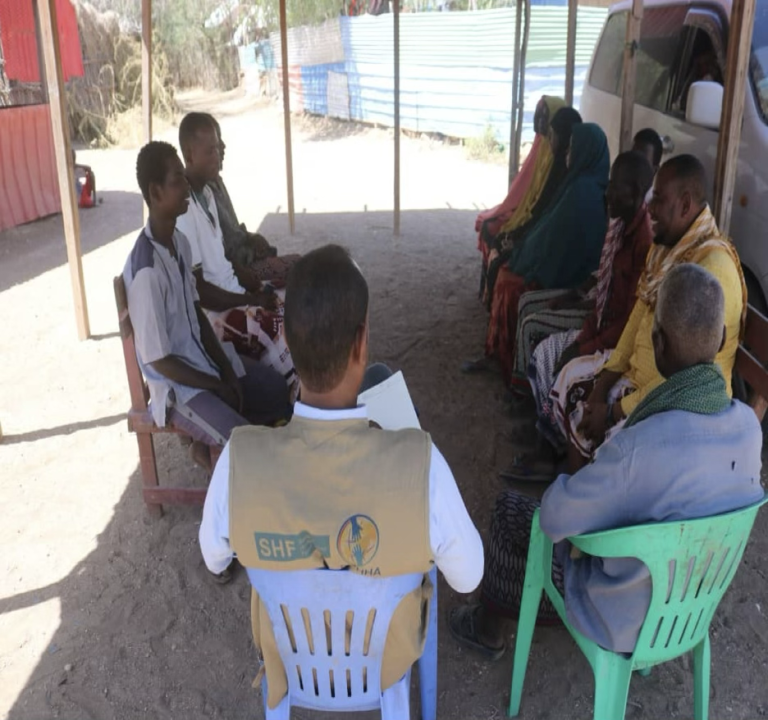
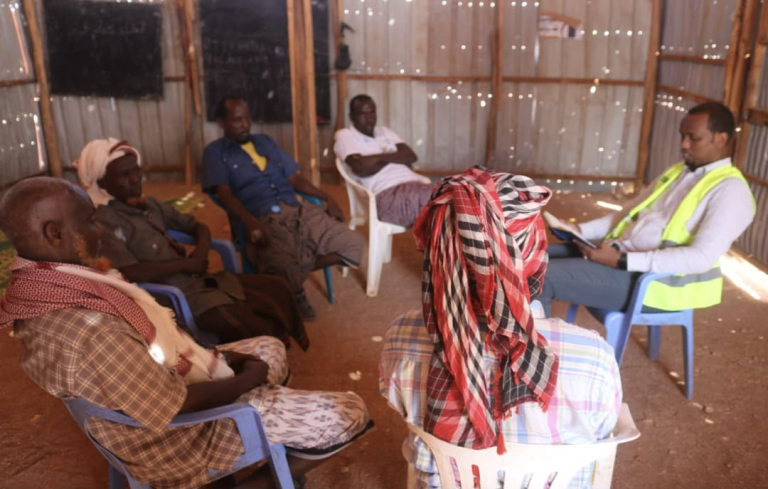
The participants are responsible for community outreach, household visits, nutrition screening, caregiver counseling, and follow-up, making them key actors in ensuring effective MNP utilization at community level.
6. Key Achievements
- Improved knowledge and technical capacity of CHWs and IYCF Counsellors on MNP programming
- Participants demonstrated correct preparation and administration of MNP during practical sessions
- Enhanced ability to counsel caregivers and address misconceptions and side effects
- Strengthened integration of MNP messaging within routine IYCF and community nutrition services
- Improved coordination between community-level workers and health facilities
7. Challenges and Mitigation Measures
Challenges
- Varied levels of technical knowledge among participants
- Initial confusion on dosage and frequency during practical sessions
Mitigation Measures
- Use of simplified job aids and visual materials
- Additional practical demonstrations and role plays
- Ongoing supportive supervision by SOHHA Nutrition Officers
8. Lessons Learned
- Hands-on demonstrations are essential for effective MNP training
- Integrating MNP with IYCF counseling improves acceptance and sustainability
- Regular follow-up by trained CHWs and IYCF Counsellors enhances compliance at household level
9. Recommendations
- Conduct refresher trainings for CHWs and IYCF Counsellors
- Strengthen post-training monitoring and supportive supervision
- Expand MNP training coverage to additional communities
- Ensure continuous supply and proper storage of MNP sachets
10. Conclusion
The training on Micronutrient Powders successfully strengthened the capacity of 16 CHWs and 8 IYCF Counsellors to address micronutrient deficiencies among children under two years in Beletweyne District. With support from the Somalia Humanitarian Fund, SOHHA has enhanced community-level preventive nutrition services, contributing to improved child nutrition and health outcomes. SOHHA remains committed to scaling up evidence-based nutrition interventions in collaboration with donors, government authorities, and nutrition cluster partners.
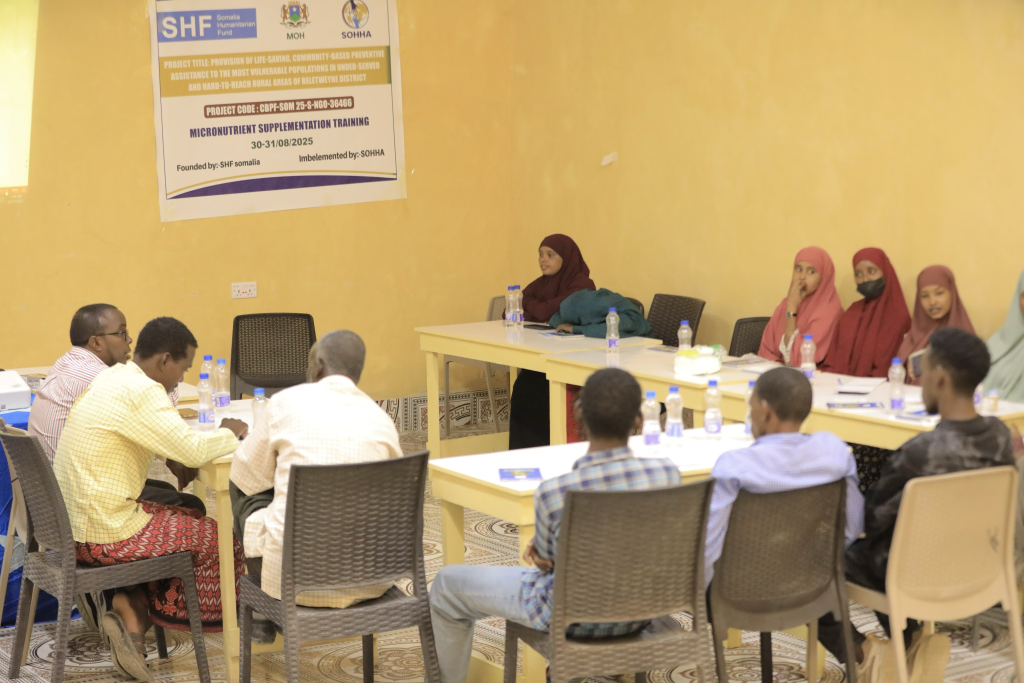
Group Discussion