FAMILY / MOTHER MUAC TRAINING REPORT

Project Title
Provision of Life-Saving, Community-Based Preventive Nutrition Assistance to Vulnerable Populations in Hard-to-Reach Areas
Implementing Organization
Somali Helping Hands Association (SOHHA)
Donor Somalia Humanitarian Fund (SHF)
Location
(12) Targeted Villages: Baacaad, Baacadbuke, Dabeyl, Dharkeynta, Farlibaax, Gasle, Guriyacade, Kabxanleey, Lafoole, Qooqane, Qoydo villages, and Siigaaloow fixed cemter
Reporting Period September – 31 October 2025
Target Group
Caregivers and Pregnant and Lactating Women (PLW)
Total Trainees
4,000 participants
- Female: 3,200
- Male: 800
1. Background and Context
Acute malnutrition remains a critical public health concern in Beledweyne District, particularly among children under five years of age. Limited access to health facilities, recurrent shocks, and low awareness of early malnutrition signs contribute to late detection and delayed treatment.
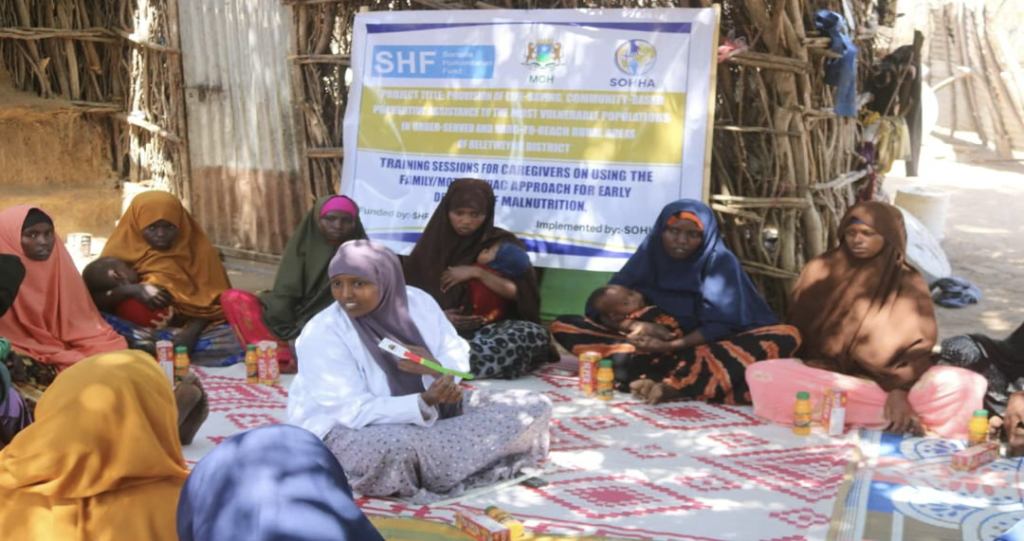
To address these challenges, SOHHA, with support from SHF, implemented Family/Mother MUAC training as a community-based approach to empower caregivers and pregnant and lactating women (PLW) to identify early signs of malnutrition at household level and seek timely care.
The Family MUAC approach is globally recognized as an effective strategy for improving early detection, referral, and treatment outcomes for acute malnutrition through direct caregiver involvement.
2. Training Objectives
Overall Objective
To strengthen early detection and referral of acute malnutrition through empowering caregivers and PLW with practical skills in the Family/Mother MUAC approach.
Specific Objectives
- To build caregivers’ capacity to correctly use MUAC tapes at household level
- To increase community awareness of early warning signs of acute malnutrition
- To promote timely referral of malnourished children to nearby health and nutrition facilities
- To reduce delays in treatment-seeking behavior and prevent severe malnutrition cases
3. Target Population
The training targeted caregivers and PLW residing in eight selected villages and IDP camps within Beledweyne District, focusing on households with children under five years of age.
Participant Breakdown:
- Female caregivers and PLW: 3,200
- Male caregivers: 800
Male participation was encouraged to strengthen household-level support and shared responsibility for child nutrition.
4. Training Methodology
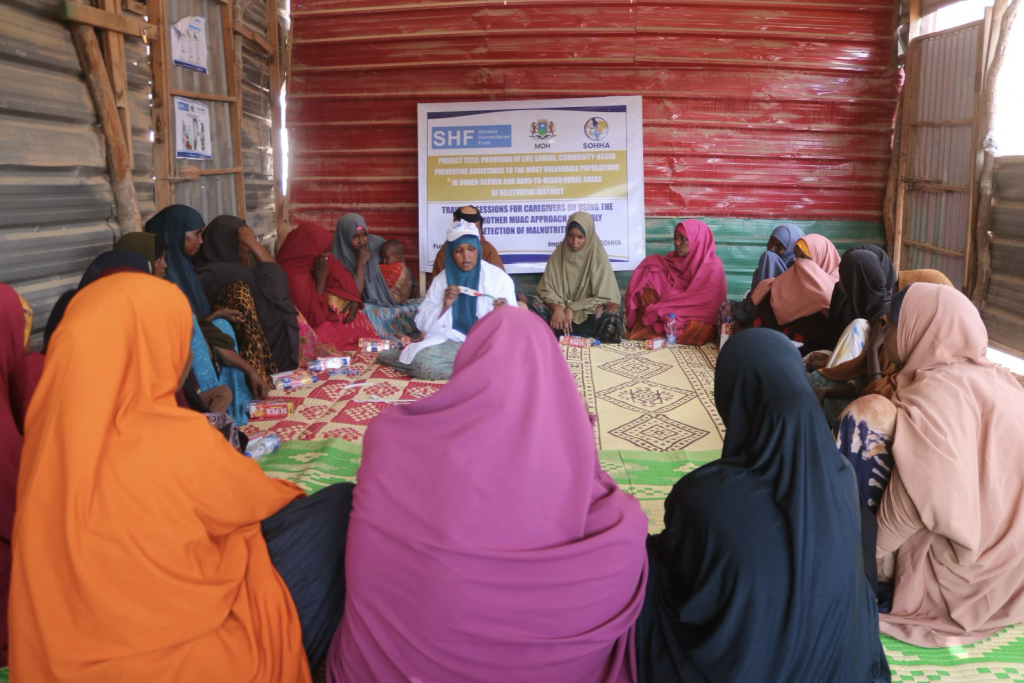
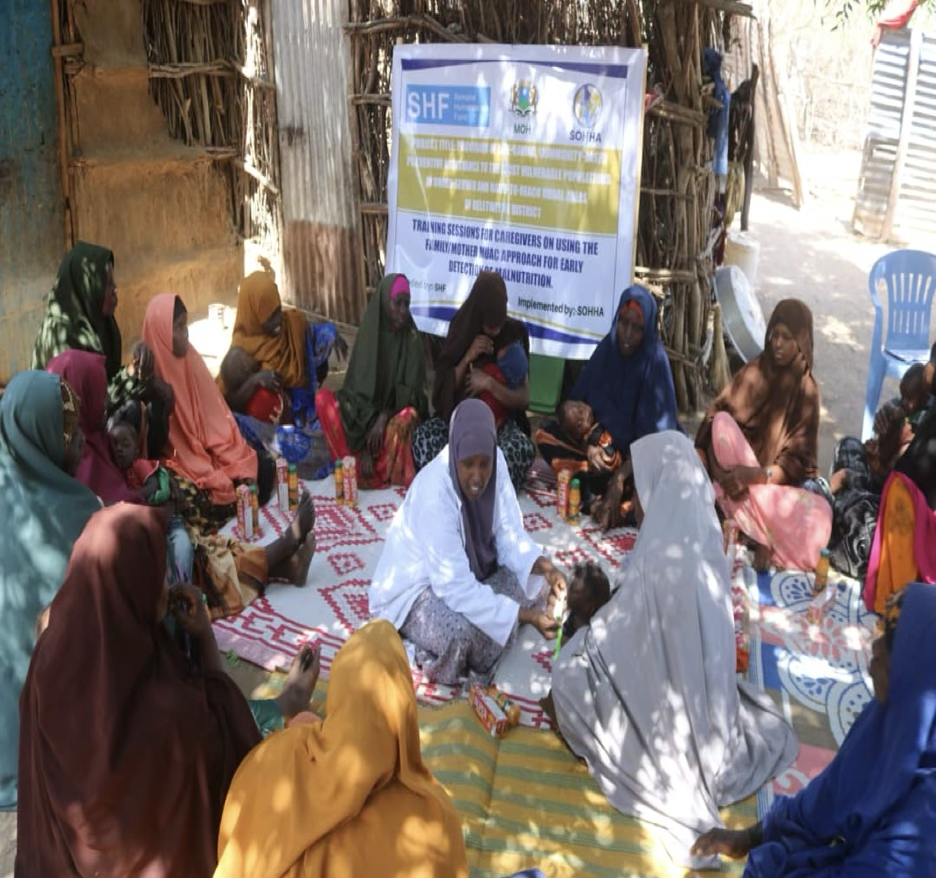
The Family MUAC training sessions were conducted using participatory and practical approaches, including:
- Interactive group discussions
- Live demonstrations using color-coded MUAC tapes
- Hands-on practice sessions
- Question-and-answer sessions
- Use of visual aids and locally appropriate examples
Training was delivered in the Somali language to ensure full comprehension.
5. Training Content
The training curriculum covered the following key topics:
- Overview of Acute Malnutrition
- Definition and types of malnutrition (SAM and MAM)
- Causes and consequences of malnutrition
- Introduction to Family/Mother MUAC
- Purpose and importance of Family MUAC
- Role of caregivers and PLW in early detection
- Use of MUAC Tape
- How to correctly position and read the MUAC tape
- Understanding color codes (Green, Yellow, Red)
- Frequency of MUAC measurement at home
- Identification of Danger Signs
- Weight loss, poor appetite, swelling (edema)
- When to seek immediate medical care
- Referral Pathways
- Where and how to refer malnourished children
- Importance of timely referral and follow-up
- Care Practices
- Infant and Young Child Feeding (IYCF) key messages
- Hygiene and sanitation practices linked to nutrition
6. Training Implementation
The training was rolled out across eight targeted locations through multiple sessions to ensure manageable group sizes and effective learning. Sessions were facilitated by trained SOHHA nutrition officers, community health workers (CHWs), and supervisors.
Community leaders and local health partners were engaged to mobilize participants and support training acceptance at community level.
7. Key Achievements
- 4,000 caregivers and PLW successfully trained on Family MUAC
- Increased caregiver confidence in identifying malnutrition at household level
- Improved awareness of early referral pathways for malnourished children
- Enhanced male caregiver involvement in child nutrition monitoring
- Strengthened community ownership of malnutrition prevention efforts
8. Challenges and Mitigation Measures
Challenges
- Low literacy levels among some caregivers
- Initial misconceptions about MUAC tape use
- Competing household responsibilities affecting attendance
Mitigation Measures
- Emphasis on demonstrations and practical exercises
- Use of pictorial and color-based learning tools
- Flexible session timing to accommodate caregivers
9. Lessons Learned
- Practical, hands-on demonstrations significantly improve skill retention
- Engaging both female and male caregivers enhances household-level impact
- Repeated messaging and follow-up are essential for sustained practice of Family MUAC
10. Conclusion and Recommendations
The Family/Mother MUAC training successfully empowered caregivers and PLW in Beledweyne District with essential skills for early detection of acute malnutrition. The intervention contributes to timely referrals, reduced severity of cases, and improved child survival outcomes.
Recommendations
- Continuous refresher training and follow-up supervision
- Integration of Family MUAC into routine community outreach activities
- Sustained distribution and replacement of MUAC tapes
- Strengthened linkage with health facilities for effective referrals