Minority and Persons with Disabilities (PWD) Inclusion Report

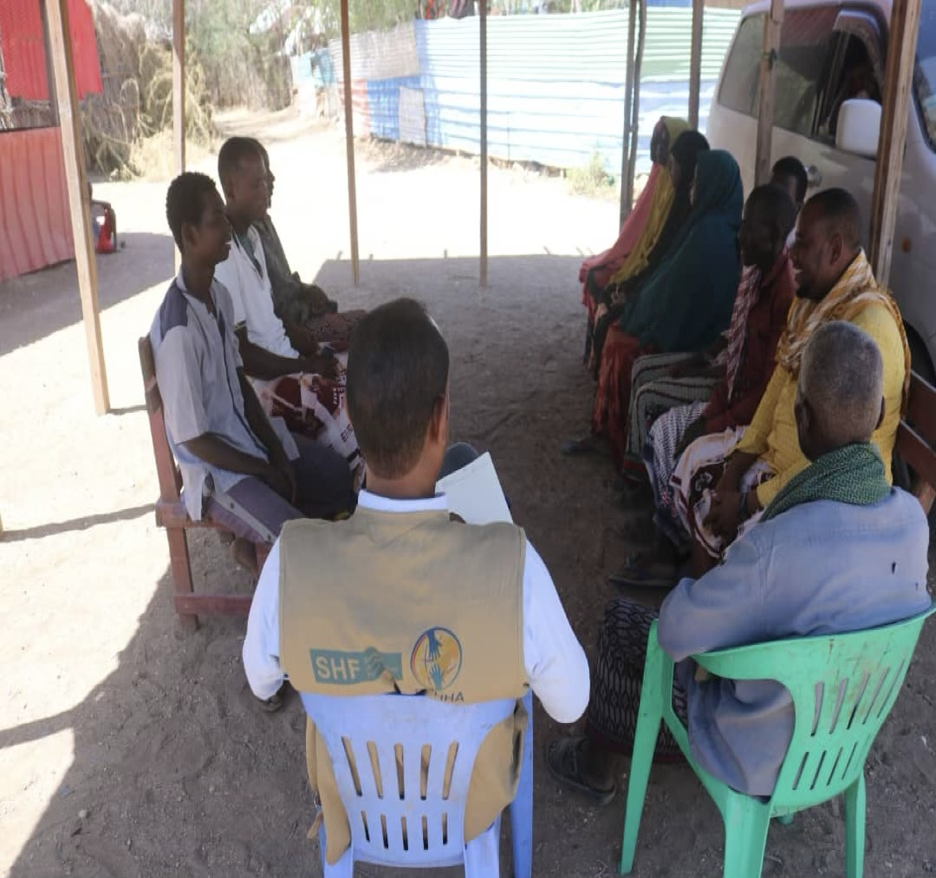
Activity: Village Community Committee and Traditional Elders’ Meetings on Inclusion
Implementing Organization: Somali Helping Hands Association (SOHHA)
Donor: Somalia Humanitarian Fund (SHF)
Reporting Period: [Insert reporting period]
1. Commitment to Inclusion
Somali Helping Hands Association (SOHHA) remains firmly committed to promoting equity, inclusiveness, and non-discrimination across all project interventions. In line with the principles and priorities of the Somalia Humanitarian Fund (SHF), SOHHA ensures that humanitarian assistance is delivered impartially and reaches the most vulnerable populations without exclusion based on clan affiliation, disability, gender, age, or social status.
The meaningful inclusion of minority groups and persons with disabilities (PWDs) is a core component of SOHHA’s humanitarian approach and is systematically integrated throughout the project cycle, from planning and implementation to monitoring and reporting.
2. Village Community Committee and Traditional Elders’ Engagement on Inclusion
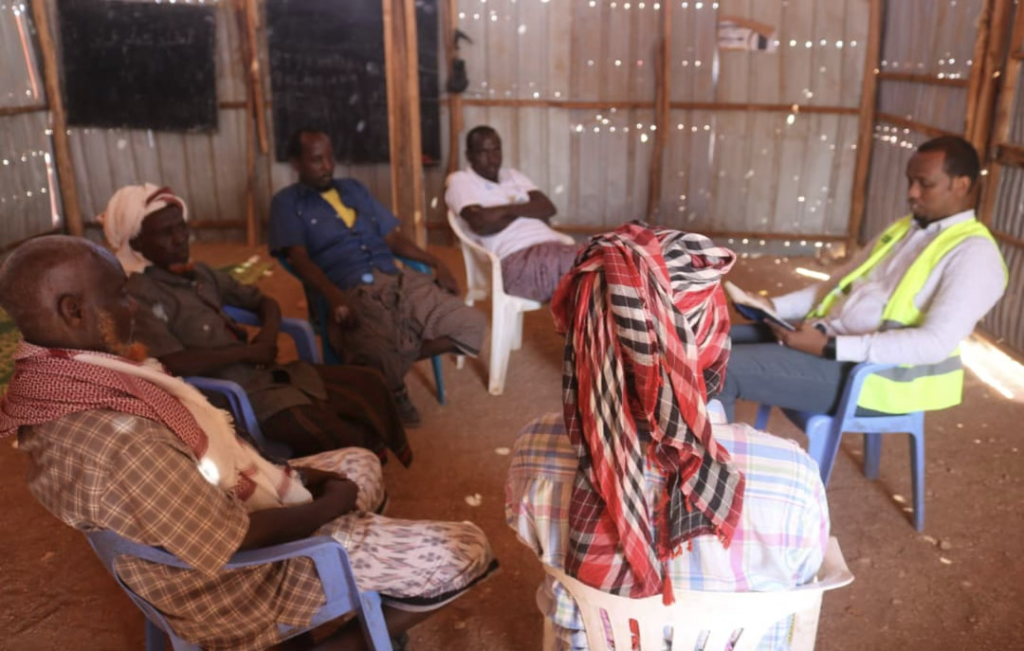
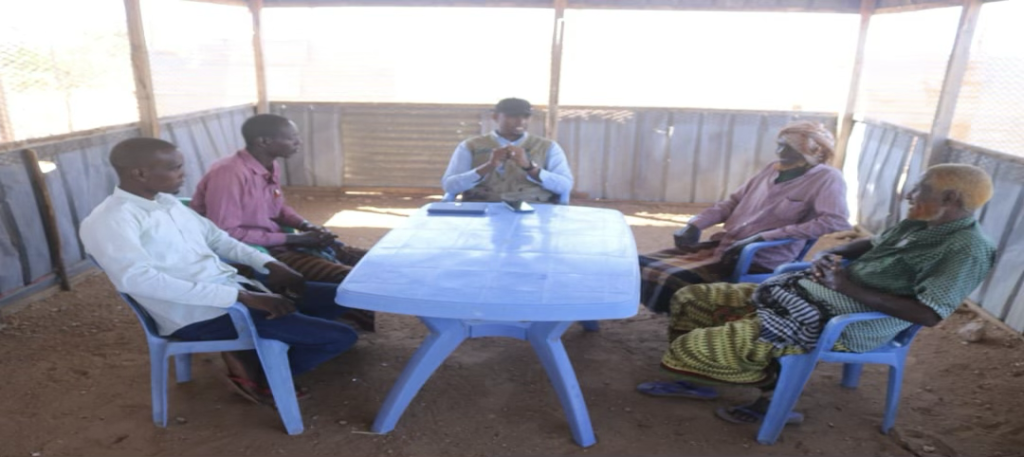
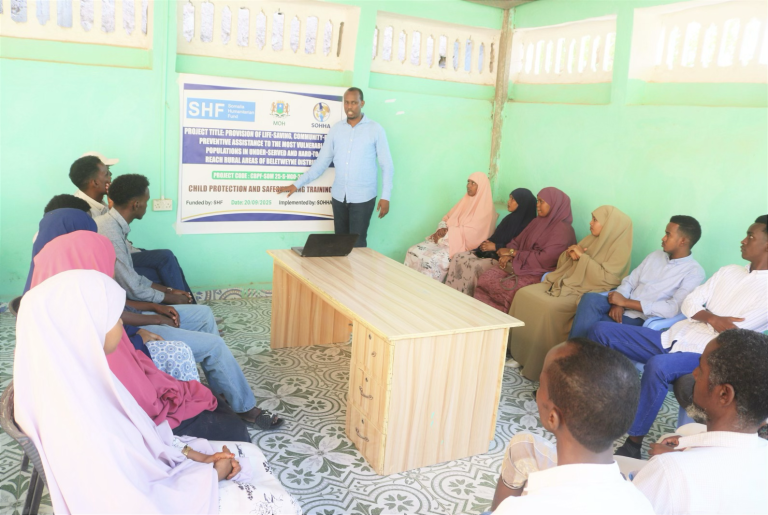
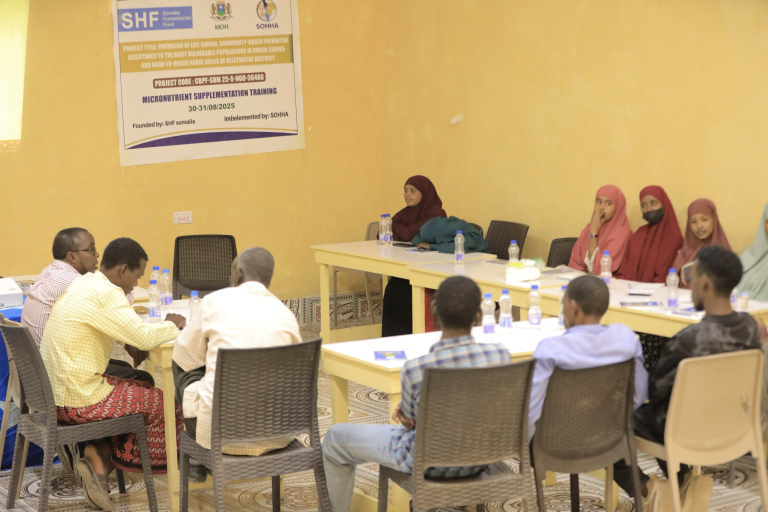
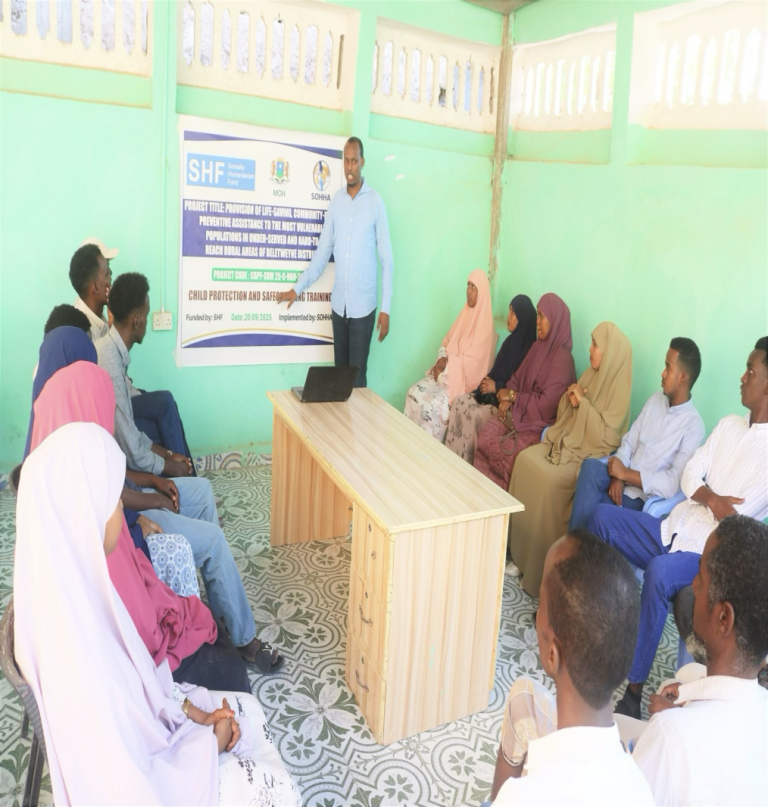
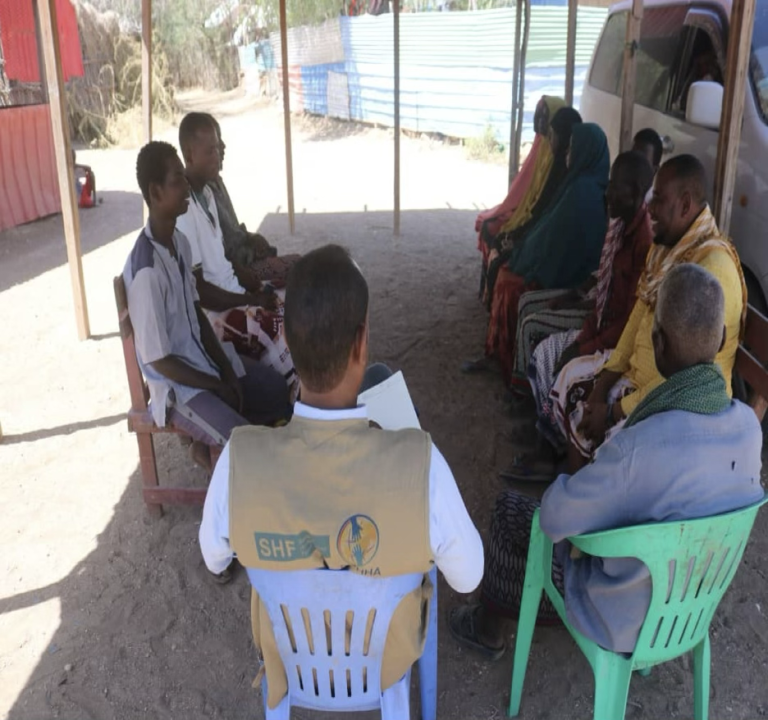
SOHHA conducted structured village-level meetings with community committees and traditional elders across the targeted villages to promote inclusive participation and address barriers to access for minority groups and PWDs. These meetings served as a critical platform to strengthen community ownership, reinforce protection principles, and ensure collective responsibility for inclusion.
Traditional elders and committee members were sensitized on:
- The importance of non-discrimination and equitable access to humanitarian assistance;
- The rights and specific vulnerabilities of minority groups and persons with disabilities;
- The role of elders and community leaders in preventing exclusion, stigma, and elite capture;
- The need for transparent, fair, and community-validated beneficiary selection processes.
Elders and committee members demonstrated strong commitment to supporting inclusive practices and actively encouraged community members to respect and uphold inclusion principles during project implementation.
3. Inclusive Community Representation and Participation
SOHHA ensured that community committees in each targeted village included representatives from minority groups and persons with disabilities. These representatives actively participated in meetings and decision-making processes related to project activities.
The committees played a key role in:
- Community sensitization and awareness-raising on project objectives, eligibility criteria, and entitlements;
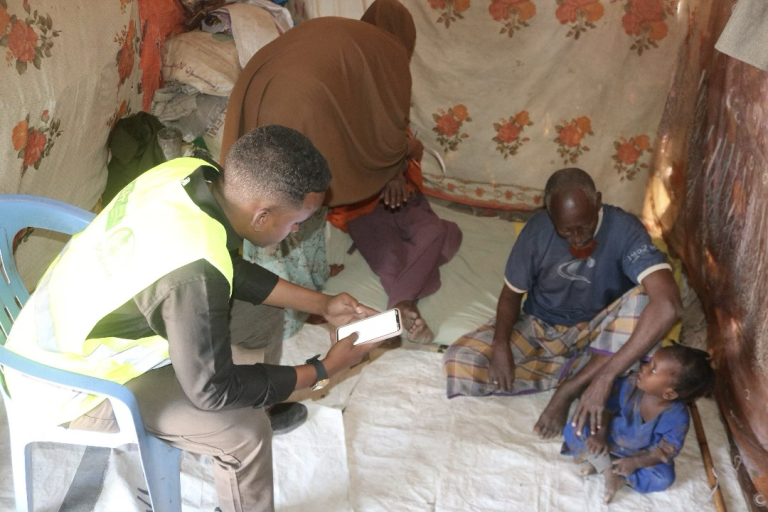
- Identification and verification of vulnerable households, with particular attention to minority and PWD-headed households;
- Supporting transparent, participatory, and accountable community processes;
- Facilitating two-way communication between the community, traditional elders, and SOHHA project teams.
The inclusion of minority and PWD representatives strengthened trust, improved information flow, and ensured that community decisions reflected diverse perspectives and needs.
4. Inclusive Beneficiary Identification and Targeting
SOHHA applied clear, transparent, and vulnerability-based selection criteria, reinforced through community committee and elders’ meetings, to ensure equitable access to assistance. Specific measures included:
- Prioritization of minority households, PWD-headed households, and households with members living with disabilities;
- Community validation meetings led jointly by committees and traditional elders to minimize bias, discrimination, and exclusion;
- Active involvement of minority and PWD representatives during beneficiary verification to reduce the risk of oversight or elite capture.
All beneficiary data was collected, managed, and stored in accordance with humanitarian data protection and confidentiality standards.
5. Accessibility and Reasonable Accommodation
To ensure that assistance was accessible to all eligible beneficiaries, SOHHA implemented reasonable accommodation measures informed by community and elders’ consultations, including:
- Selection of distribution sites that are physically accessible and safe for persons with mobility limitations;
- Flexible scheduling of activities to accommodate caregivers and persons with disabilities;
- Provision of additional support such as helpers, priority queues, and guided assistance for individuals with physical, visual, or hearing impairments;
- Use of clear, simple, and culturally appropriate messaging delivered in local languages.
These measures helped reduce physical, social, and communication barriers that could otherwise hinder access for minority groups and PWDs.
6. Data Disaggregation, Monitoring, and Reporting
SOHHA systematically collected and analyzed disaggregated data by gender, age, disability status, and minority status. This approach enabled:
- Monitoring of participation and coverage of minority groups and PWDs;
- Identification of gaps, barriers, or risks of exclusion;
- Timely corrective actions through adaptive programming.
Findings from community committee meetings, traditional elders’ consultations, and post-distribution monitoring (PDM) were used to continuously improve inclusion practices.
7. Complaints, Feedback, and Reporting on Exclusion
SOHHA maintained an accessible and inclusive Complaints and Feedback Mechanism (CFM) to enable community members, including minorities and PWDs, to safely report concerns or cases of exclusion. The CFM included:
- Community help desks during distributions;
- Trained community focal points, including minority and PWD representatives;
- Confidential and safe reporting channels to ensure dignity and protection;
- A dedicated hotline (614571244) available at all times for calls and messages.
All reported cases were:
- Logged, reviewed, and investigated in a timely manner;
- Addressed through appropriate corrective actions, including beneficiary list revisions or re-verification;
- Documented and summarized in periodic narrative reports.
8. Accountability and Continuous Improvement
SOHHA regularly reviewed inclusion practices through community consultations, elders’ feedback, PDM findings, and internal supervision. Lessons learned and good practices were documented and integrated into ongoing and future programming to strengthen accountability, quality, and effectiveness.
9. Conclusion
SOHHA remains committed to ensuring the meaningful inclusion of minority groups and persons with disabilities at all stages of project implementation. Through active engagement of village community committees and traditional elders, transparent targeting, reasonable accommodation measures, robust monitoring systems, and accessible feedback mechanisms, SOHHA continues to prevent exclusion and address barriers to access. These efforts contribute to a more equitable, accountable, and impactful humanitarian response in line with SHF principles.
10. Recommendations
To further strengthen minority and PWD inclusion, SOHHA recommends:
- Continued capacity-building for staff, community committees, and traditional elders on inclusion, disability awareness, and protection principles;
- Strengthened collaboration with local minority- and disability-focused organizations;
- Further enhancement of accessible communication tools and formats for information dissemination;
- Regular review and refinement of inclusion indicators to improve monitoring and reporting quality.